How to prepare for a wedding dress fitting
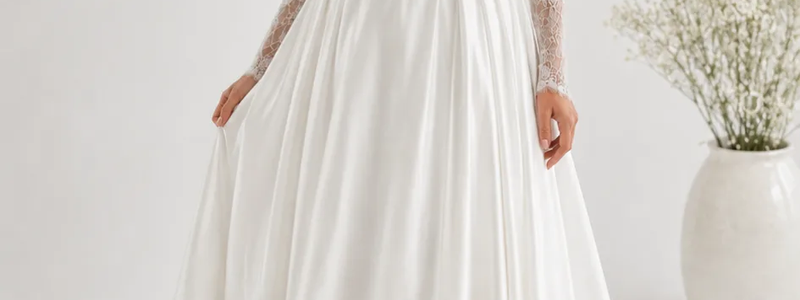
Go to your wedding dress fitting in the shoes you’ll wear on the day and the underlayer you plan to wear with the dress. If you have a backup pair of shoes, and a veil or headscarf that affects the look, bring those to the right fitting too. Before your appointment, ask whether it’s a style-choice fitting, a mid-fitting or a final length check.
When you leave, you should know not just which style you like but what will change and what will be checked next time. The checklist and fitting note below are there for that. To see how custom patterning, fittings and delivery work step by step, read how ordering custom-made at Glorvia works.
Your fitting bag: start with what you’ll really use

- Shoes: Bring your real wedding shoes so the hem can be set for them. If you don’t have them yet, ask us whether a safe stand-in with the same sole height will work.
- A second pair: If you’ll switch to lower shoes at the celebration, bring those too. When the height changes, the way the hem meets the floor changes.
- Underlayer: Try the underwear you plan to wear with the dress. Before buying a new corset or bra, ask about the dress’s own support; not every style needs an extra piece.
- Accessories that change the look: Find out which fitting to bring your veil, headscarf, tiara or large earrings to.
- Notes and references: Keep your questions on your phone or in a notebook. For any reference photo, name the detail you love: the neckline, the sleeve, the waistline or the way the skirt moves.
Wear something that’s easy to take off. Follow the atelier’s advice on skin products that could mark the fabric. Ask about photo and companion rules before your appointment; you don’t have to finish every accessory at the first meeting. To see how styles might look on you before the appointment, you can use our AI wedding dress try-on and arrive with a clearer idea of what you want.
If you’re not sure about your underlayer, our guide to what to wear under a wedding dress helps you compare the options.
Look closely: the waist seam isn’t in the same place on every style
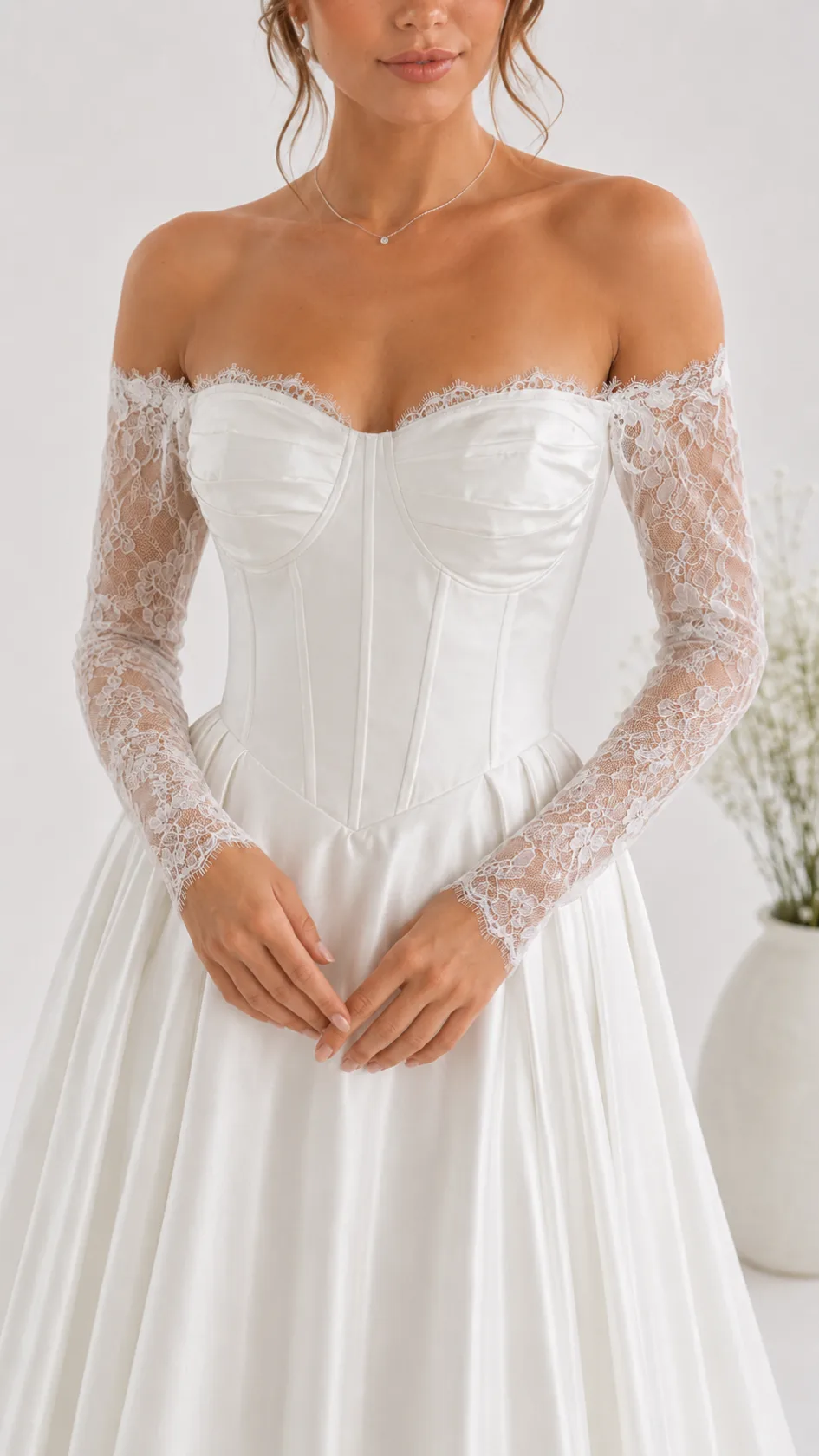
On Gloire, the waist seam doesn’t run in a straight line. So don’t expect every waist seam to sit parallel to the floor at your fitting. Ask what line the design is meant to follow first, then judge the balance on your own body.
Neckline and sleeves: Reach your arms forward and bend your elbows. If the neckline shifts, a sleeve pulls or the lace irritates your skin, show us. Standing still in a photo doesn’t prove you can move comfortably.
Bust and inner support: Visible seams alone don’t tell you which support pieces are inside. Ask the atelier to show you the cups, boning or lining. Then check for pressure and slipping with the underlayer you’ll actually wear.
Waist and bodice: When you sit, does the bodice ride up? Are there pull lines on either side that you didn’t expect? Show the problem on your own body rather than only saying “a little tighter.”
If your measurements need retaking, our wedding dress measurement guide covers the key points. For the final measurement list, go by the points the atelier asks for on your chosen style.
Check the back view and how you move
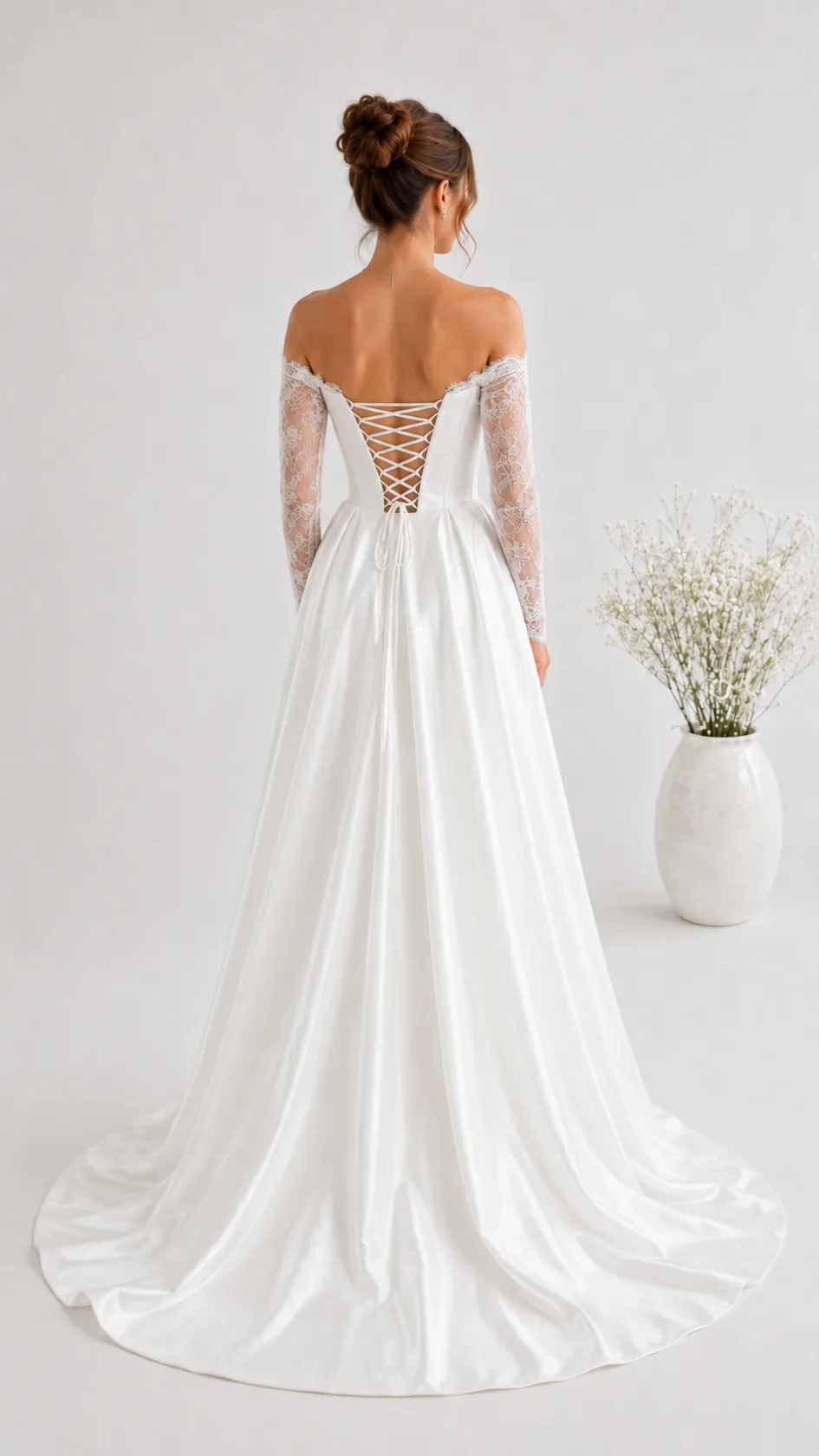
If you see lacing at the back, don’t assume the style will fit every body. Ask how the closure adjusts, whether the gap in between is part of the design, and whether there’s a back panel. With a zipper or buttons, try the closure all the way up.
A dress that looks good standing still should also pass the movements below. If something feels wrong, stop and show us rather than forcing the movement.
| Movement | What to look for |
|---|---|
| Walking and turning at a normal pace | Does the front hem catch your feet? Do the skirt layers gather around your legs? |
| Sitting down in a chair and standing up | Does the bodice ride up? Does a seam or the closure press? |
| Reaching your arms forward and bending your elbows | Does a sleeve pull? Does the neckline or cuff shift in a way you didn’t expect? |
| Taking a controlled step and a short dance move | Do the skirt, knees or train restrict your movement? |
| Walking again in your backup shoes | Does the front hem touch the floor? |
Don’t brush off pain, pinching or tight breathing with “I’ll get used to it.” Try the way of gathering or carrying the train with the person who’ll help you. You can see options in our guide to choosing a wedding dress train.
From the fitting to the next step: agree your notes together
Copy these four headings into your phone: area, observation, agreed action, next check. Add the date and the person you spoke with. The row below is only an example of note-taking, not a real customer record.
| Area | Observation | Agreed action | Next check |
|---|---|---|---|
| Front hem | Touches the floor when walking in the backup shoes | Discuss hem options with the atelier for both shoe heights | Walk again in both pairs |
| … | … | … | … |
If photos are allowed, take front, side and back views in similar light. A short video of you moving can complete your notes too. Remember the camera can change perspective and color, so write down how it felt alongside the image.
At your final fitting, before you take the dress:
- Try the closures, the shoes and your real underlayer together.
- Show the person who’ll help you how the train and any bustle work.
- Check for open seams, stains or missing accessories.
- Get the instructions for carrying, storing and caring for the dress.
- Agree any open alterations and the delivery date.
What if my shoes aren’t ready yet?
At the final length check, your real shoes make the clearest comparison. If you’ll use a temporary pair, talk to the atelier about the sole height, not only the heel height. When the shoes change, a recheck may be needed.
What if my measurements change?
Share your current measurements with the atelier. How much can be changed depends on the seam allowance, the closure and the stage of production, so no one can say in advance. For timing, you can read our guide on when to start shopping for a wedding dress.
How many people should I bring to a fitting?
One companion who knows your preferences and can help take notes may be enough. Go by the atelier’s rule on numbers, and ask yourself whether a crowd makes it easier or harder to decide.
If you can come to Gaziantep, you can book a fitting appointment at our atelier and work through your preparation and companion plans with our team. Ordering from abroad? Use the measurement guide and ask us about any step. For fit and adjustments after delivery, read about our approach to fit and alterations, and confirm what applies to your own order.
Before your first fitting, write down why you like two styles
The low shoulder and long lace sleeves of Gloire and the square neckline and puff sleeves of Belissa create different fitting priorities. On Gloire, watch where the neckline sits as you reach forward; on Belissa, watch how the sleeve and cuff move as you bend your elbow. Both have a corset structure, so when you choose an underlayer, first look at the dress’s own support.
If you live in another city or abroad, we can go through the fitting steps by video call, and your dress travels by insured courier. See our page on shipping bridal and evening dresses worldwide.