How to choose a wedding dress train
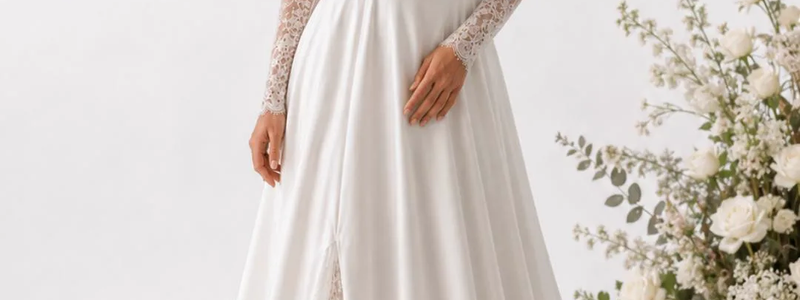
Choose your wedding dress train by its width, the ground and how it gathers, as much as by its length. Ask the atelier where the measurement starts, and try the train open and gathered in your real shoes. How it looks in a photo doesn’t tell you how it will feel when you walk.
The best train isn’t the longest one; it’s the one that can become the look you’ve planned for the ceremony, the photos and the celebration. For a train length made for you, a detachable piece or a skirt proportioned to fit your venue, you can get in touch with us about a custom-made wedding dress.
See the train length in centimeters before you go by the name
Names such as “brush,” “chapel” or “cathedral” are in common use, but the sense of length can vary between brands and designs. Ask where the length is measured from, and mark the starting point and the widest point together on the actual dress. If a weight is given, find out what is included in the measurement.
Two dresses that look the same from the front can have completely different surface areas at the back. Also think about how many people it takes to spread the train for photos, and where it bulks up when it’s gathered.
The cut changes where the train starts
A-line train
On an A-line wedding dress the train can be the natural continuation of the skirt panels that start at the waist. The wider it gets, the stronger the ceremonial effect, but ground contact and the bulk when gathered grow too.
Mermaid train
On a mermaid wedding dress the train opens out after the fitted section around the hips or knees. Test that the weight of the gathered train doesn’t pull the slim skirt down or limit how your knees move.
Princess skirt train
A princess wedding dress already has a wide skirt surface. A train can add to that volume. Try the hoop, the petticoat and the train-gathering system together; otherwise the back can bunch up unevenly.
The venue sets the real limit of your train
A long hotel corridor and a small civil-ceremony room make the same train feel very different. Check these points about your venue:
- The length and width of the ceremony path
- Stairs and steps
- Grass, sand, stone or carpet
- The space between tables, and the dance floor
- Where you get out of the car
- The width of elevators and doors
- A plan for rain or wet ground
If you only plan to keep the train open along the ceremony path, you need a plan for changing it for photos and the celebration.
How fabric and detailing affect weight
A fine tulle train can be wide yet light, and it moves more in the wind. Satin and mikado give a smooth surface, but weight and friction grow as the length increases. Dense lace, beading and three-dimensional appliqués can change both the weight and the chance of catching on the ground.
When you lift the train in your hand, check whether the weight collects in one spot, whether the seams are being pulled and whether carrying it strains your wrist.
How to choose a train-gathering system
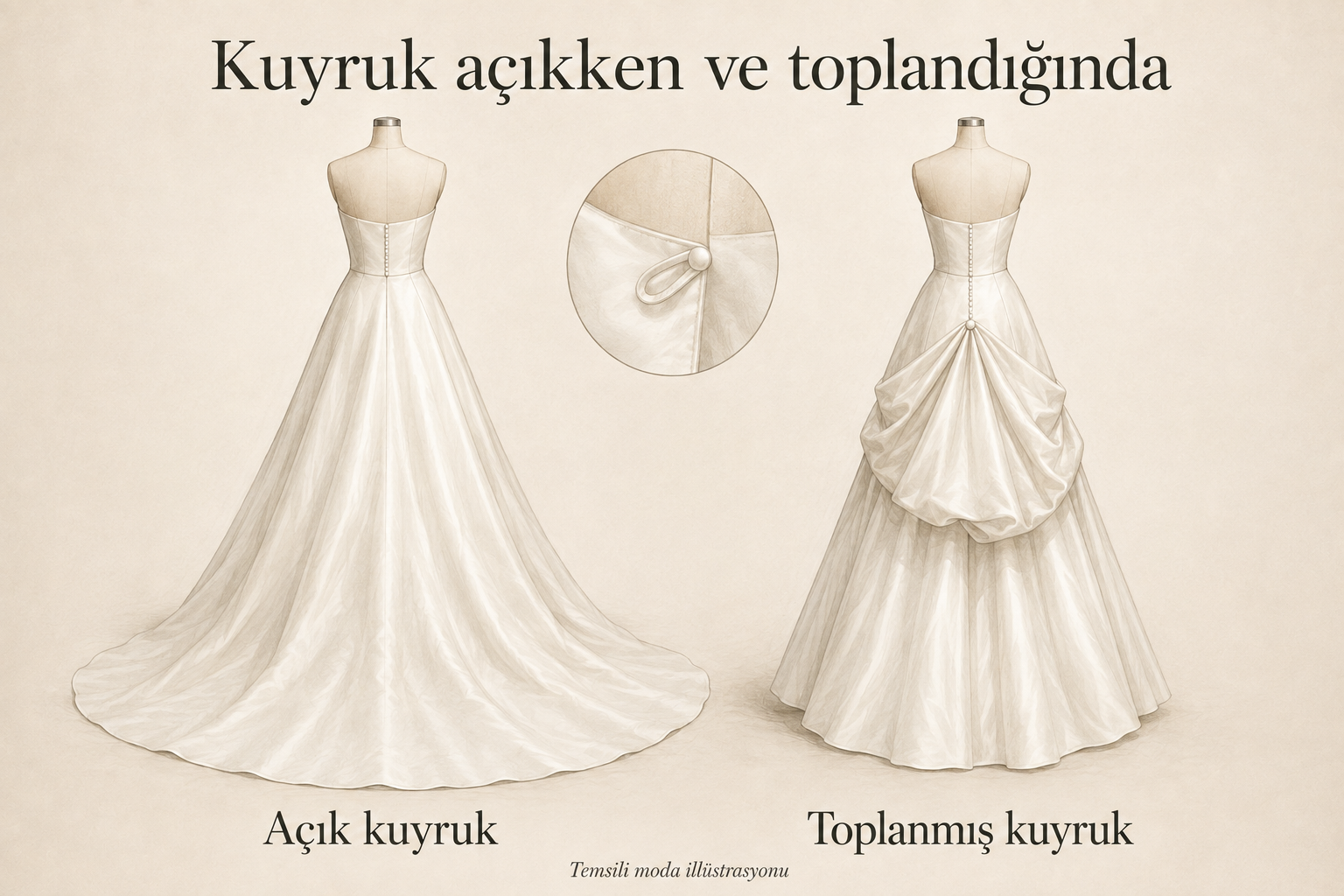
A gathering system lifts the train off the floor during the celebration. There can be single-point, multi-point or internal fastening solutions. The right system depends on the seams of the design and the weight of the fabric.
Try this at your fitting:
- Have the person who’ll help you gather the train.
- Check the view from the front, the side and the back.
- Walk, sit and turn.
- Look at whether the attachment points are being pulled.
- Try opening it up again.
A gathered train shouldn’t create a heavy bulk at the hips or pull the front of the skirt up. Wearing a wrist loop all night also keeps one hand busy, so think about how long you’ll really use it. If you can come to Gaziantep, you can book a fitting appointment to see the weight of a cathedral or chapel train in the mirror and to test your walking, and any hidden gathering mechanism, before the wedding. Ordering from abroad? Our measurement guide shows how to measure yourself, and you can ask us how the train of any style is built and gathered before you order.
Who might a detachable train suit?
A detachable train can give you a fuller look at the ceremony and a simpler one at the celebration. The attachment can be made with a belt, a waist seam or a hidden system. Check that the piece:
- Doesn’t pull down the waist of the main dress
- Doesn’t bother you when you sit
- Doesn’t show its attachments when it’s on
- Can be taken off quickly with help
- Can be stored safely once it’s off
When it’s removed, make sure the back of the main skirt looks complete. The dress without the train shouldn’t look as if something is missing.
Brief your photographer and ceremony team
Decide in advance who will spread, adjust and gather the train. A photographer can arrange the train for different angles, but during the ceremony a bridesmaid, a companion or someone else on the team should take on that job.
The person helping you should learn the attachment system at your final fitting. Hidden buttons and loops tried for the first time on the wedding day waste time.
Record the train measurement and the gathering plan together
A name like “cathedral train” alone doesn’t give you a comparable measurement. Have the atelier mark the starting point they use on a drawing or a photo. Don’t compare two lengths directly unless they’re measured from the same reference.
| What to record | Why it matters | How to confirm |
|---|---|---|
| Where it’s measured from, and the length | The same name can be measured differently | With the reference the atelier marks |
| The widest point | Narrow passages and layout planning | On the real dress, spread open |
| Gathered look | Weight and movement can change | From front, side and back; while walking |
| Attachment and the person helping | The system needs to be known on the day | The helper opens and gathers it |
After you gather the train, check the front hem length again. If the attachment pulls the fabric or restricts movement, talk through a solution with the atelier. Don’t use makeshift pins or ties in place of the dress’s own system.
- Record the open and gathered looks separately.
- Have your helper learn the gathering attachment.
- Decide on carrying, storage and the wet-ground plan together.
Read the train in the back view of Gloire
In the back view of Gloire, the satin skirt spreads across the floor, and the lace-up back closure and lace sleeves appear in the same frame. To understand how much space a dress you love from the front takes up at the back, always look at full-length back views like this one.
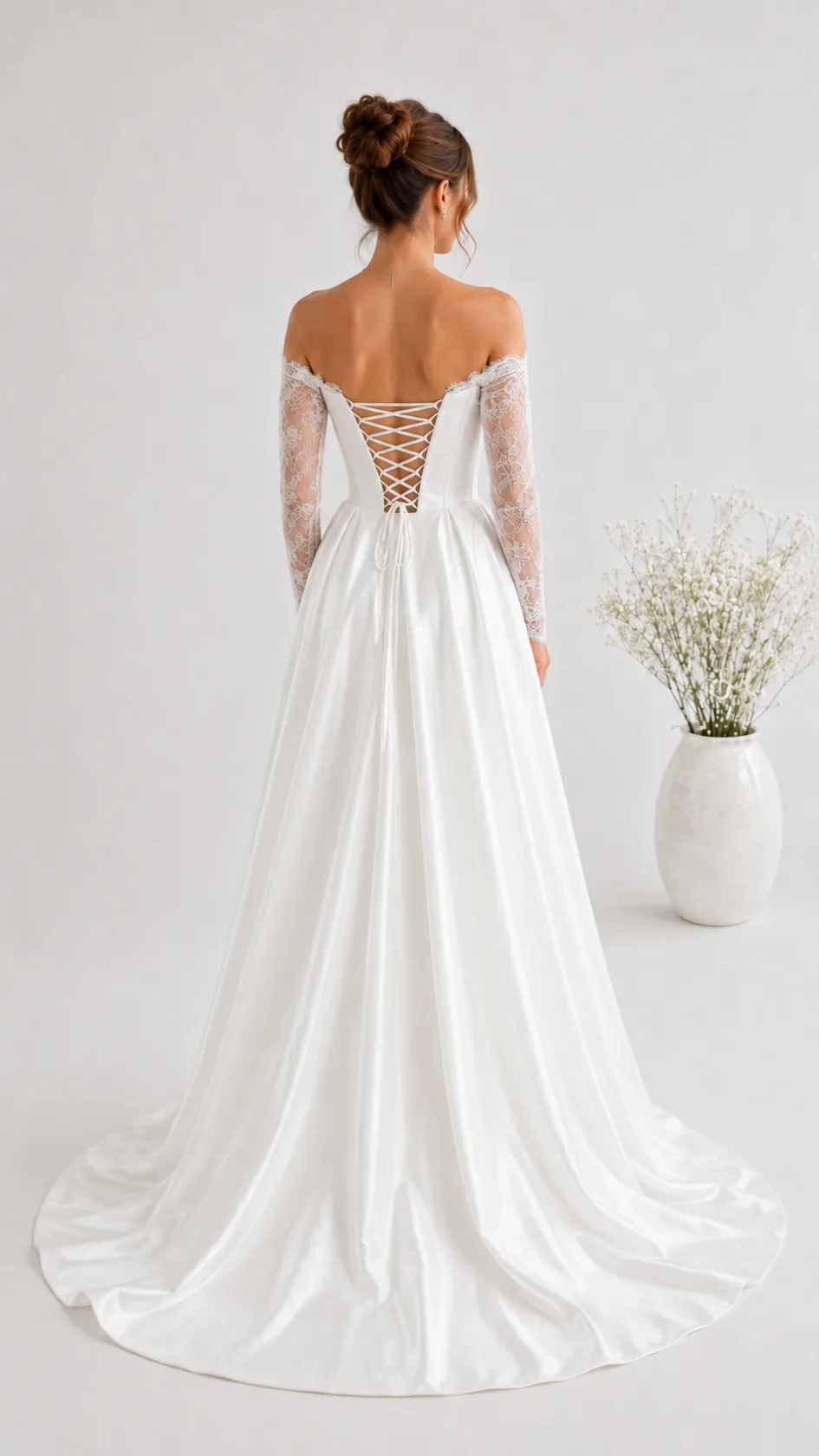
If you like the look of Gloire, open the product page and consider it together with your train and skirt preferences. When you order, describe the open look you want using this photo, and ask us separately about gathering options for the celebration.
Frequently asked questions
Can you dance with a long train?
It can be possible if the train can be gathered or removed safely. Rehearse the system with real dance movements, not just standing still.
Can a train be attached to your wrist?
Some designs have a wrist loop. Carrying it in your hand for a long time can keep your hand busy and add weight, so compare it with a gathering system before you decide.
Can a shorter bride wear a long train?
Yes. The result depends not only on your height but on where the train starts, how wide it is, the fabric and the overall proportion of the skirt. Judge it from full-length views and how it moves.