What to wear under a wedding dress
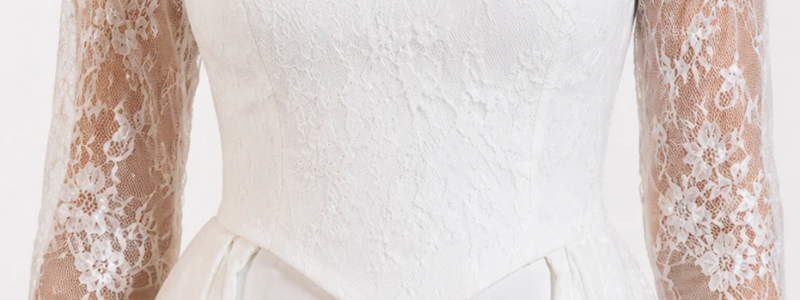
What you wear under your wedding dress depends on three things: the neckline, how open the back is, and how much support the dress already has. Not every dress needs an extra bra, corset or shapewear. Try your actual underlayers with the dress itself, and check whether anything shows, slips, presses or gets in the way when you move.
The goal isn't to hold everything in as tightly as possible. It's a base layer that works with the design of the dress and stays comfortable all day.
Gloire and Belissa: start with the support built into the dress
Gloire has a boned corset bodice, and Belissa a corset top with vertical boning. With dresses like these, the first question isn't “which corset should I buy?” but “what, if anything, do I need on top of the support the dress already gives me?” The off-the-shoulder Gloire and the square-neck Belissa also hide underwear lines in different places.
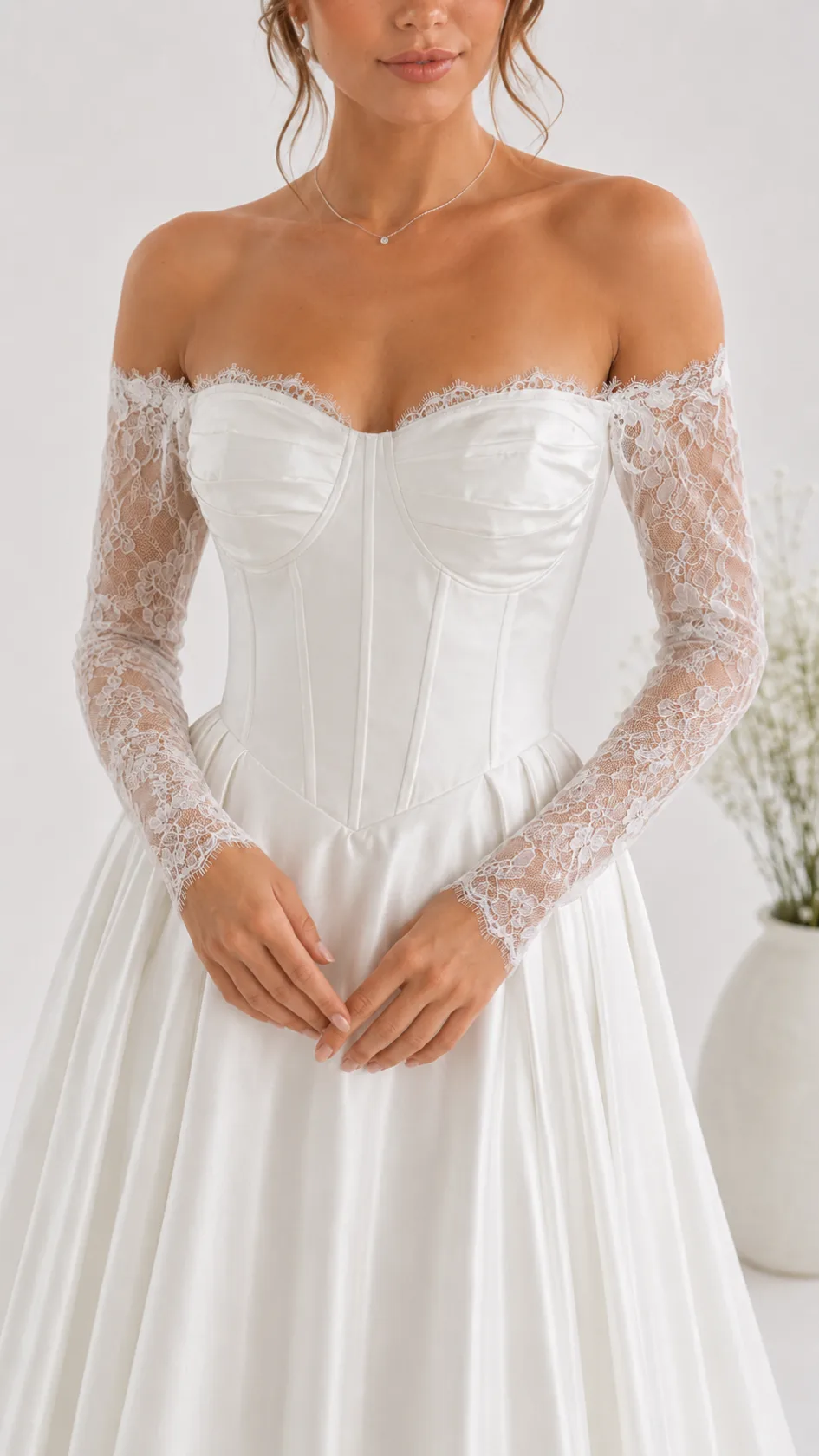
Try the dress on as it is first. Then, if you need to, add the underlayer you’ve chosen and compare: does it show at the neckline or in the back opening, or leave a line at the waist?
Get to know the inside of the dress first
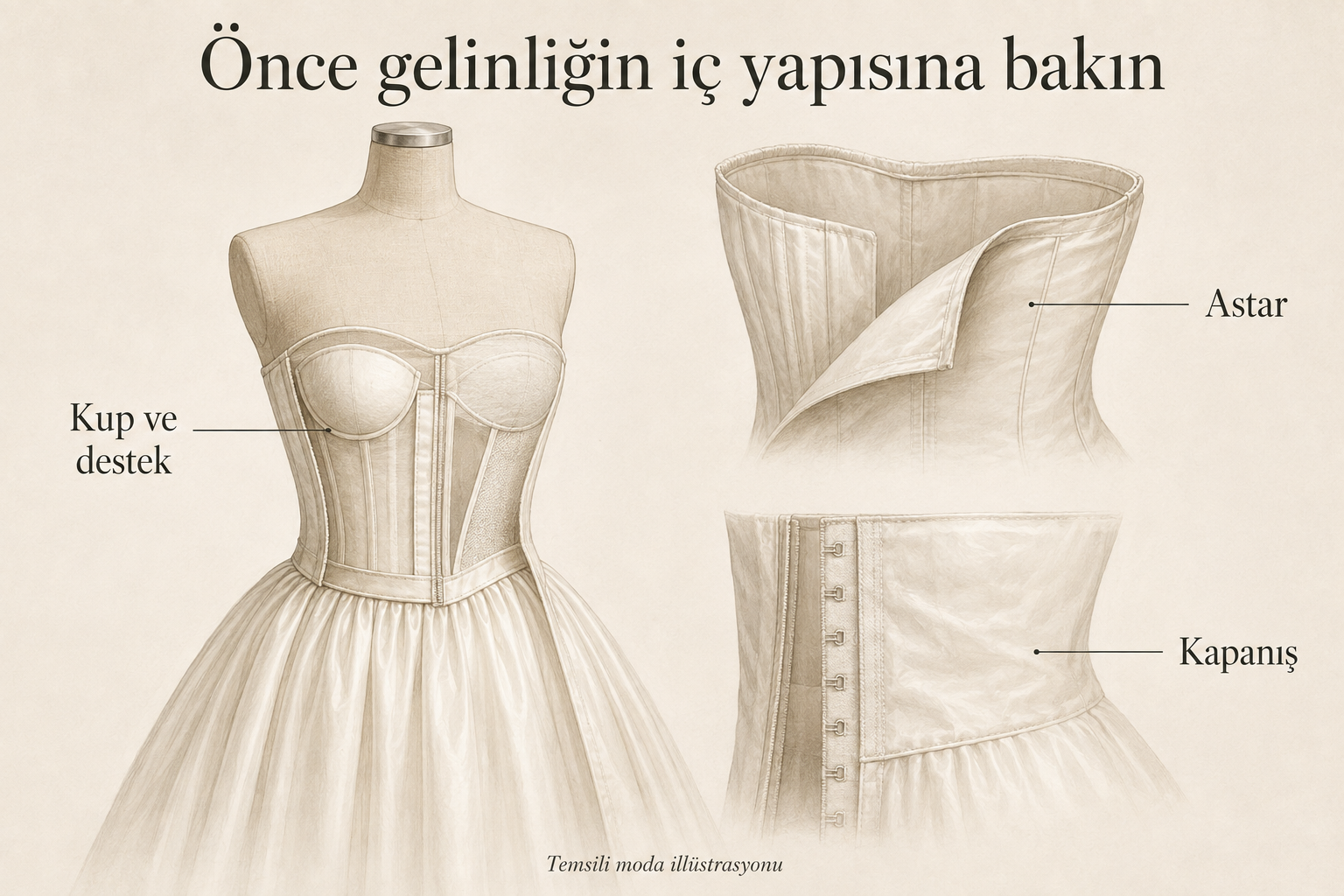
Don’t judge a dress from the outside alone. Ask the bridal shop or dressmaker to turn it inside out and show you:
- Built-in cups or bust support
- Boning and bodice seams
- The waist stay
- Lining layers
- Straps and where they attach, if there are any
- The inside of the back closure
If the dress already gives enough support, a second stiff corset can press, show through as a line or sit your bust at the wrong height. If there isn’t enough support inside, a strapless bra picked at random may peek out at the neckline or push the bodice up. We explain how we check the bust fit of corset dresses in our post on fitting day at our atelier.
Choosing a bra for your neckline and back
Strapless and off-the-shoulder dresses
Your options include a strapless bra, a bandeau, sewn-in cups or simply the dress’s own bodice. Whatever you choose has to stay up all day without straps. At your fitting, raise your arms, lean forward and sit down. Standing still in front of the mirror doesn’t tell you enough.
Deep V-neck
You may need a plunge bra or support built into the dress. Check in different light that no band or edge shows through the neckline. Adhesive bras suit some skin better than others: follow the instructions, and if your skin is sensitive, ask a professional first.
Open back
Low-back bras, adhesive support or sewn-in structure are all possible. It isn’t enough for the fastening to be hidden in the mirror; make sure it doesn’t ride up when you sit or move.
Long sleeves and high necklines
In a modest wedding dress or any covered style, a boned bodice that shapes the body matters as much as how opaque the lining is. A covered look doesn’t mean underwear lines can’t show: straps and colors can stand out under fine tulle or lace. Test the sleeve and neckline lining in daylight and with a camera flash.
Do you need a corset or shapewear?
Shapewear is optional. If you’d like to wear it, decide what it’s for: a smoother fall of fabric, less chafing between the thighs, bust support or simply feeling comfortable. Each of these calls for a different piece.
Skip anything that makes it hard to sit or move normally. If it hurts or feels clearly uncomfortable, take it off, and take any health questions to a medical professional.
At your fitting, wear the shapewear for at least a few minutes and check from the front, side and back whether its edges leave a line under the dress.
Which underwear color shows least?
White underwear isn’t always the least visible choice under a white dress. A seamless piece close to your skin tone often shows less, depending on how opaque the fabric is. But no single “nude” shade works for everyone.
Check your underwear in three kinds of light:
- Daylight
- Artificial light similar to your venue
- A phone flash or strong backlight
A line you can’t see in a catalog photo can show once you start moving.
Do you need a petticoat or hoop under the skirt?
A petticoat, crinoline or hoop can hold the shape of the skirt, keep the layers away from your legs and make walking easier. In a full-skirted princess wedding dress, it stops the layers from wrapping around your legs and gives you room to walk. Its width should still suit your venue, the space between tables and the cut of the skirt. An A-line wedding dress may not need the same support as a princess skirt, and in a mermaid wedding dress the point where the skirt flares matters too.
Don’t swap the underskirt at the last minute. A wider hoop can shorten the front hem, change how the train falls and make sitting harder.
Don’t forget your thighs and feet
For a long day, seamless shorts or an anti-chafing layer can help. Make sure it doesn’t bunch up under the skirt or ride up as you walk. If you plan to wear tights or stay-up stockings, think about them together with open-toe shoes, any slit in the skirt and your bathroom breaks.
Start from the structure of the dress
Instead of asking “which corset should I buy?”, start with “what support is already inside this dress?” The seams on the outside won’t tell you. Ask to see the inner structure, then try what you actually need with the dress. If you can come to Gaziantep, you can book a fitting appointment at our atelier and test the cups, boning and bodice support on yourself. Ordering from abroad? Our measurement guide shows how to measure yourself, and you can ask us about the inside of any style before you order.
| Dress feature | Check first | Look for in an extra piece |
|---|---|---|
| Strapless / off-the-shoulder | The dress’s own support and how the neckline moves | Stays hidden at the neckline and doesn’t slip |
| Deep front opening | Center-front height and inner structure | Edges that stay inside the opening |
| Open back | The line of the closure and existing support | Doesn’t ride up when you sit |
| Slim or close-fitting skirt | Lining and visible lines | Edges that don’t bunch, and easy movement |
Bring the exact pieces you plan to wear to your final fitting. Each time you add something new, check again how the dress sits at the bust and waist. Tighter doesn’t mean a better fit, so don’t keep wearing something that’s uncomfortable.
- Buy only what you need; extra support is optional.
- Check the underlayer separately at the neckline, the back and under the skirt.
- Test any backup piece in the same light and with the same movements.
Frequently asked questions
Do you wear a bra under a wedding dress?
It depends on the dress. If it has sewn-in cups and enough support inside, you may not need one. Decide at your fitting, based on the neckline, how you move and how it feels.
Does white underwear show under a white wedding dress?
It can. A seamless option close to your skin tone shows less under some fabrics. Always test it with the actual dress and in different light.
Does a corset make a wedding dress look better?
Not always. It can clash with the dress’s own bodice or create visible lines. Comfort and fit matter more than extra tightness. To see gowns engineered with built-in boning and cups, explore our corset wedding dresses and our transparent wedding dress prices guide.