Choosing a wedding dress for your body shape
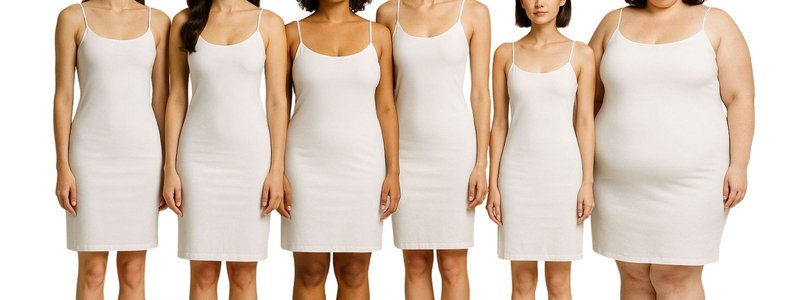
Choosing a wedding dress by body shape doesn’t mean “this size can only wear that style.” Your shoulder, waist, hip and height proportions are a starting point for imagining how different cuts may sit on your body. The final decision comes from comfort, your personal style, the setting of your wedding and how the dress feels on you.
In this guide we look at how A-line, mermaid and ball gown wedding dresses can read on different proportions, together with fabric, neckline, support and fitting choices.
Which measurements do you need to understand your proportions?
Don’t define yourself only by weight or a ready-to-wear size. For a wedding dress pattern, what really guides the fit is the proportions between your measurements and the vertical length of the dress. Bust, waist, hip, height and shoulder-to-floor length each tell a different story, and for sleeve designs your upper arm and arm length may be needed too. Ask us which measurements your chosen style needs.
- Bust: measured horizontally around the fullest part of the chest, with your arms relaxed.
- Waist: measured at the narrowest point of your natural waist, without pulling the tape tight.
- Hip: measured around the fullest part of your hips, with your feet together.
- Height: measured from the top of your head to the floor, standing straight without shoes.
- Shoulder to floor: measured with the shoes you’ll wear with the dress in mind.
For step-by-step instructions on how to take your measurements, use our measurement guide. If you can, ask someone to help, use a tape measure that doesn’t stretch, and wear the underwear you plan to wear with the dress.
Four things to settle before you choose a cut
Body shape alone isn’t enough to decide with. Two people with the same proportions may feel comfortable in completely different dresses because of different needs for support and movement.
- Movement: Will you be standing for a long time, using stairs or dancing a lot?
- Support: How much support do you want from the bodice, straps, sleeves or neckline structure?
- Setting: A ballroom, a garden, a beach or a civil ceremony can each affect skirt volume and fabric weight.
- Personal style: The goal isn’t to hide your body. It’s to feel comfortable and strong in a silhouette that’s yours.
Wedding dress options by body shape
The shapes below describe proportions, not categories you have to fit into. Many people sit between two of them, and you can ignore any label that doesn’t feel like you.
Hourglass
If your shoulders and hips are close in measurement and your waistline is more defined, your proportions may be close to an hourglass. If you want to bring out your waistline, you could look at mermaid wedding dresses. If you’d like more room to move, an A-line wedding dress also defines the waist and can create the same balance in a softer form.
The key question is how defined you want your lines to look. The point where a mermaid flares, how firm the bodice is and how much stretch the fabric has should all be judged together at your fitting.
Pear or triangle
If your hips measure wider than your shoulders, your proportions may be close to a pear or triangle. An A-line that opens in a controlled way below the waist can create a flowing line between the upper and lower body. Details on the upper body, such as a neckline, sleeves, draping or lace, can draw attention upward if you’d like that.
This doesn’t mean your hips are something to conceal. If you love a fitted look, a mermaid cut is a strong option too, with the right pattern and fitting. To see which effect feels like you, compare the two cuts with the same shoes and similar underwear.
Apple or oval
If the middle of your torso is fuller and your waistline is softer, your proportions may be close to an apple or oval. An A-line, or an empire waist that starts under the bust, can create a vertical, uninterrupted flow. A V-neck, controlled draping and well-placed inner support can also give a more open line through the upper body.
With a corset, look not only at how tight it is, but at where it starts and ends. A structure that presses when you sit or limits your breathing may look good standing and still be the wrong choice for a long wedding day.
Rectangle or athletic
If your shoulder, waist and hip measurements are close, your proportions may be close to a rectangle or athletic shape. Seams that define the waist, draping, a belt effect or skirt volume can give the silhouette a different rhythm. An A-line offers a balanced transition, while a ball gown creates a more defined waist and more skirt volume.
If you want a simpler look, you don’t need to give up a straight cut. With the drape of the fabric, the placement of the darts and the neckline adjusted well, a minimal design can be just as strong.
Inverted triangle
If your shoulders are wider than your hips, your proportions may be close to an inverted triangle. Pairing a simpler bodice with an A-line or ball gown skirt gives the lower half more presence, if that’s the look you want. But if you love your shoulders and want to feature them, you don’t need to rule out strapless, one-shoulder or bateau necklines automatically.
Don’t judge the neckline from the front view alone. At your fitting, check the side and back views, arm movement and strap support too.
Petite, tall and plus size aren’t separate body shapes
Height and size are different variables from shoulder-waist-hip proportions. A petite bride can have hourglass, pear or rectangle proportions, and the same is true for tall and plus-size brides. The same pattern discipline applies to evening dresses: our custom plus-size evening dresses are made with a supportive inner structure so you stay comfortable all evening.
Proportion checks for petite brides
The position of the waistline, the volume of the skirt and the length of the train matter especially at a petite height. Uninterrupted vertical lines and a measured skirt volume can give a more balanced look. If you want a ball gown, rather than giving up the style, adjust the number of layers, the waist height and the point where the skirt flares to your height.
Proportion checks for tall brides
Being tall doesn’t only mean a longer skirt. Shoulder-to-floor length, the position of the natural waist, sleeve length and where the train begins should be considered together. Horizontal lace transitions, a defined waist or a layered skirt can create the visual break you want, while a single flowing piece can emphasize height even more.
Support and movement for plus-size brides
Plus size isn’t a single silhouette. First work out your own shoulder, waist and hip proportions, then focus on bodice support, strap placement, seam lines and room to move. The goal isn’t to hide the body but to build the structure that lets you carry the look you chose safely and comfortably. In our custom plus-size wedding dresses, made to your measurements, the priority is the same: an inner bodice that fits your proportions and lets you move comfortably.
Compare three silhouettes under the same conditions
Don’t use a cut’s name as if it were a verdict on your body. Try different skirt shapes with the same shoes and underlayer, and see what you like. The illustration below only explains skirt geometry; it doesn’t show a real product, a size or an “ideal body.”
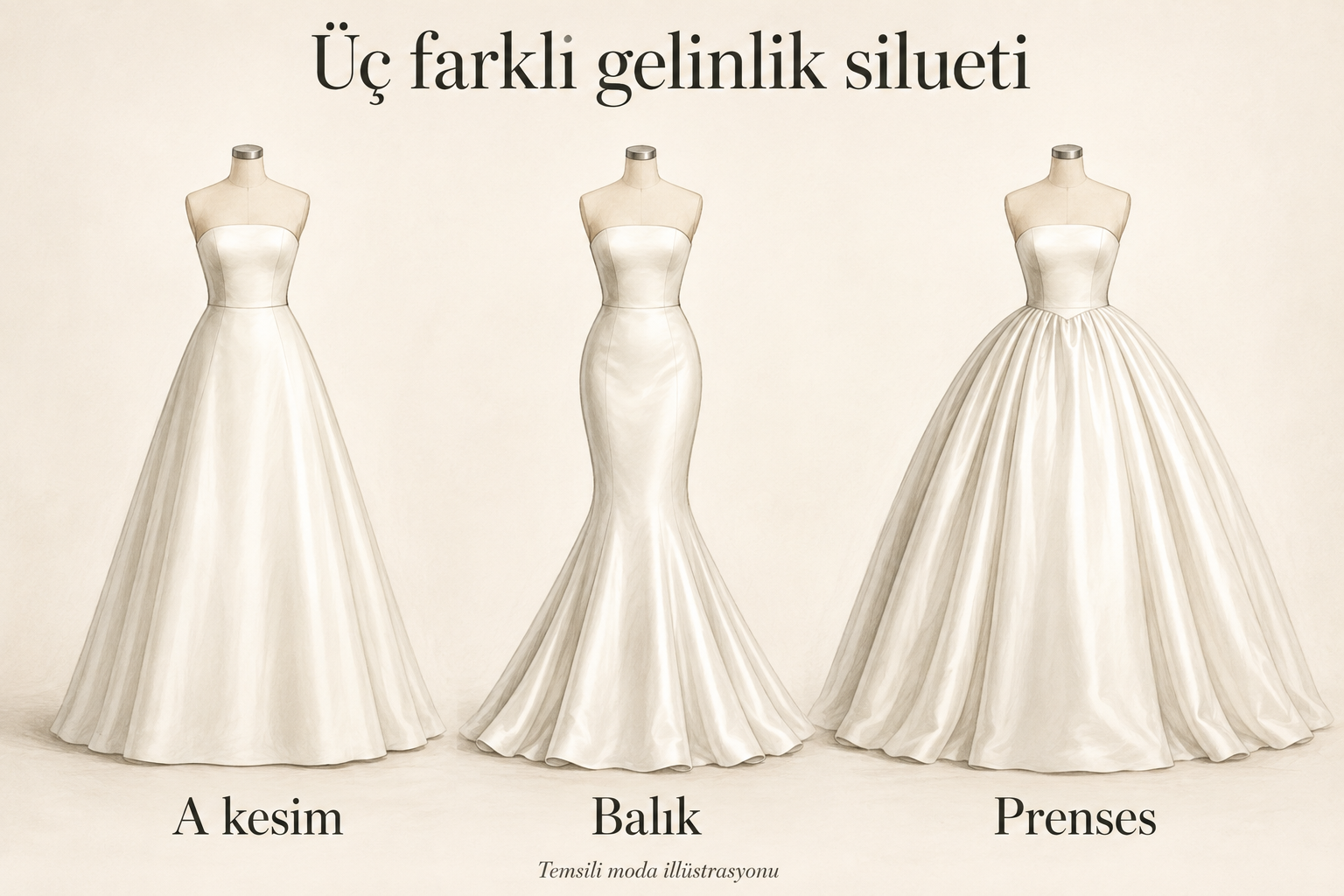
| Shape you try | Compare at your fitting | Make the note specific |
|---|---|---|
| A-line | Where the waist sits and how open the skirt is | I like the waistline; does the skirt gather comfortably when I sit? |
| Mermaid | Around the hips and knees, and where it flares | Where does the fabric pull when I take a normal step? |
| Ball gown | Skirt width, petticoat and bodice balance | Can I manage the volume when I sit and in narrow spaces? |
Keep the same photo angle. Photographing one dress close up and another from far away makes the proportions harder to compare. Note the look first, then the movement and support separately. Ask us what adjustments are possible on a design you like, and don’t assume every style can be changed to the same degree.
- Look at height, size and shoulder-waist-hip proportions separately.
- Don’t judge the waistline only by whether it’s parallel to the floor; V-shaped or dropped-waist designs are different.
- When the fabric and lining change, look at the same cut again.
How fabric changes how a dress sits
The same pattern doesn’t look the same in different fabrics. The name satin, crepe or tulle alone doesn’t decide the drape or the weight. Look at the real sample, the lining and the inner structure together; the pattern and placement of lace can change the look too.
Don’t judge the fabric from a photograph alone. Check how it looks in daylight and in your venue’s light, how it sounds and weighs as you move, and how it folds when you sit. For more, see our guide to wedding dress fabrics, details and accessories.
Movement tests for your fitting
A wedding dress has to work not only while you stand in front of a mirror but as you move through the whole wedding. At your fitting, try these:
- Walk with normal steps and try climbing stairs.
- Sit, stand up and lean forward slightly.
- Raise your arms; check the neckline, the straps and how the sleeves move.
- Turn as if you were dancing; watch the weight of the skirt and how the train behaves.
- Try the shoes and underwear you’ll wear with the dress.
- Take photos or a short video from the front, side and back.
The three-style rule for deciding
Instead of three dresses that look very alike, try three different silhouettes, for example an A-line, a mermaid and a ball gown. Give each style its own note under look, movement, support and personal feel. That way your decision doesn’t rest only on a first impression or someone else’s suggestion.
If you’d like to change the fabric, neckline, sleeves or train length of a style you love, see how our custom wedding dress process works. If you can come to Gaziantep, you can book a fitting appointment at our atelier to see how different silhouettes sit on your proportions and try patterns with our designers. Ordering from abroad? Use the measurement guide above, and ask us how a style could be adjusted for your measurements.
Three different looks within the same A-line
Nova, Belissa and Gloire are all listed as A-line, yet their upper bodices are different. Nova’s V-neck and draped waist, Belissa’s square neckline and balloon sleeves, and Gloire’s off-the-shoulder neckline and long lace sleeves each create a different focus. After choosing the cut, compare the neckline, sleeves and waistline separately, and describe the look you love through those details.
Frequently asked questions
How do I know which wedding dress style will suit me?
First work out your measurement proportions, then try at least two different silhouettes with the same shoes and underwear. Look at differences in movement, support and comfort more than at photos. A single body-shape label won’t give you a definite answer.
Does an A-line wedding dress suit everyone?
An A-line is a flexible starting point that can be adapted to very different proportions, but the waist height, skirt width, fabric and neckline should change from person to person. Rather than saying it “suits everyone the same way,” look at how the style is arranged on you.
Can petite brides wear a ball gown?
Yes. A ball gown silhouette works when the skirt volume, number of layers, waist height and train length are adjusted to you. You don’t have to rule out a cut you love because of your height.
Can plus-size brides wear a mermaid wedding dress?
Yes. What decides it isn’t your ready-to-wear size but the look you want, the support of the pattern, where it flares and how easily you can move. Be sure to do the sitting and walking test at your fitting.
When should I take my wedding dress measurements?
Share your current measurements when you order. If your measurements change noticeably before your wedding date, contact us so we can update the production or fitting plan.
In short: choose a dress that works for you, not a rule
Body shape categories are there to help you compare different cuts with intention, not to narrow your options. The right dress is the one that supports how you look, how you need to move and your personal style at the same time. Take your measurements accurately, try different silhouettes with real movements, and work out any adjustments at your fitting.