How to choose wedding dress fabrics, details and accessories
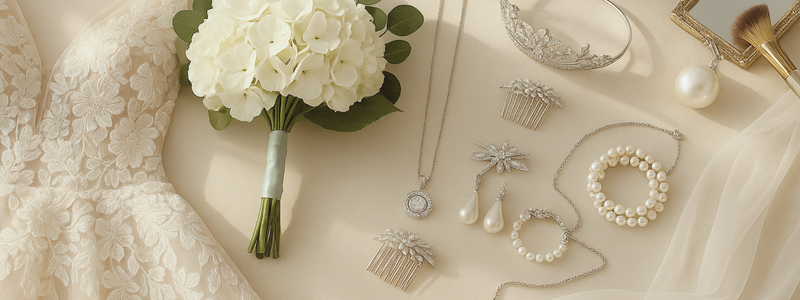
When you choose a wedding dress fabric, don’t decide on the name alone, whether it’s “satin,” “tulle” or “lace.” See a real sample together with the lining it will be used with, and compare how it drapes, how it looks in light, how it feels against your skin and how it’s cared for. Try accessories with the dress only once the fabric choice is clear.
The most reliable comparison happens when you can look at the real dress or sample, the lining, the embellishment and the inner structure together. This guide covers which details to check and the order in which to choose accessories.
Compare where the fabric sits in each Glorvia dress
A satin skirt doesn’t mean the whole dress looks the same. In Gloire, a lace bodice and long lace sleeves meet a satin skirt. Belissa pairs a satin skirt with sheer balloon sleeves and a crystal-and-pearl bust detail. In Gustosa, lace travels from the sleeves to a panel inside the skirt slit. Even within one fabric family, where the lace sits changes the look.
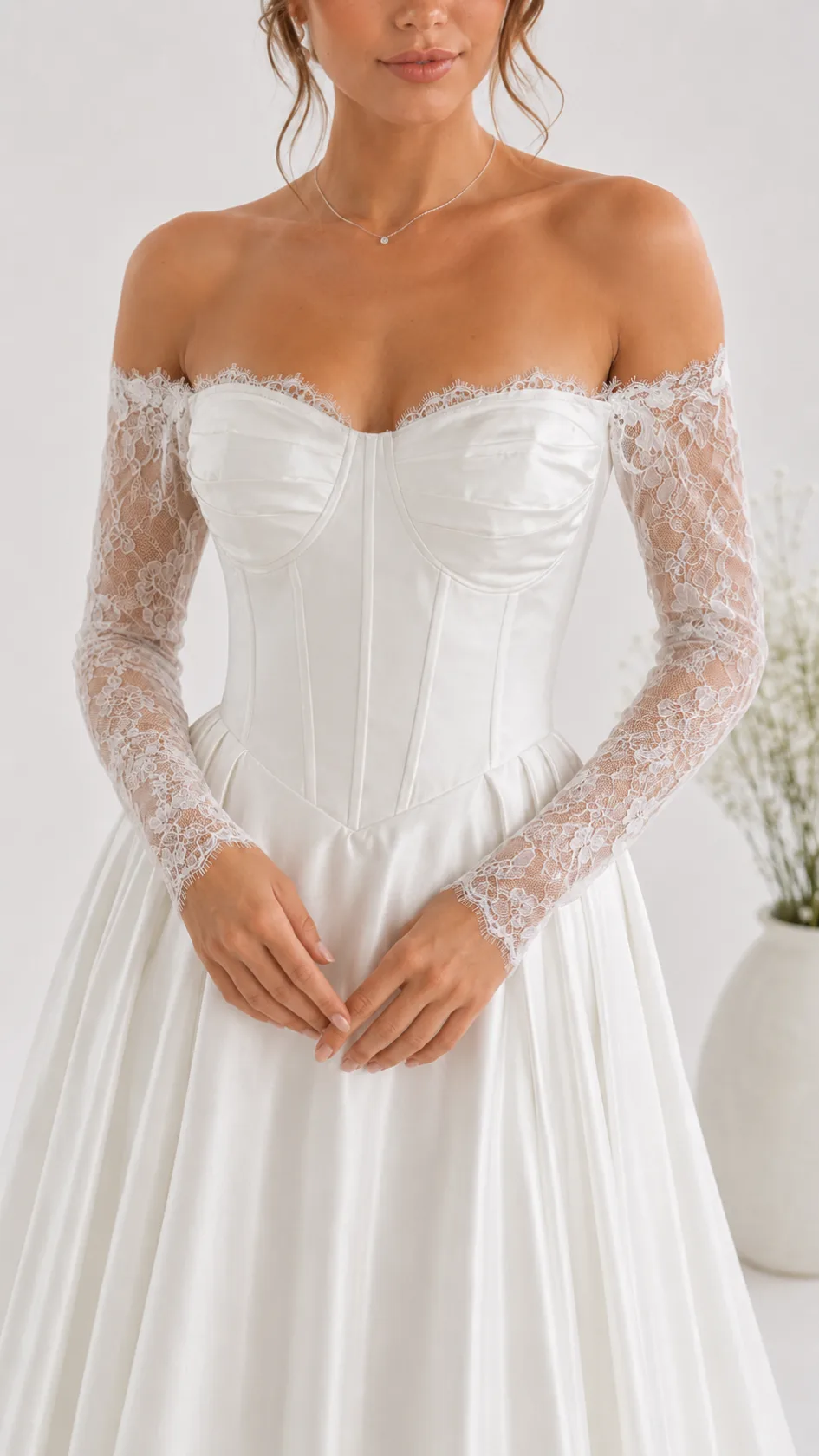
Go beyond the screen with a fabric swatch kit
Some Glorvia dress pages offer a fabric swatch kit, so you can see the drape and how the fabric catches daylight before you order. It isn’t only for wedding dresses: it also helps with custom-made evening dresses for weddings and galas. Look for the swatch option on the Gloire or Belissa page, and tell us which dress you have in mind. Ask us which fabrics and colors a swatch kit covers.
Know what fabric names can’t tell you
“Satin” usually describes a smooth, glossy weave. It doesn’t tell you the fiber. In the same way, tulle, organza, chiffon and lace each cover materials of different weight, stiffness and content, so two fabrics sold under the same name can behave very differently.
Where you can, ask about these points on the label or in the product information:
- Fiber content and care requirements
- Weight and drape
- Matte, semi-gloss or glossy surface
- How opaque it is with the lining
- How embellishment or appliqués are attached to the fabric
- How seam marks or pattern continuity are handled during alterations
Don’t judge a material by general words like “premium,” “lightweight” or “wrinkle-free.” Try to see those qualities on a real sample.
Satin: check the surface, the light and the wrinkles
Satin can give a smooth surface and a clear sheen. The result depends on the fiber, the thickness of the fabric, the lining and the cut. On wide, uninterrupted areas seams and wrinkles can be more visible, though dense embellishment can soften that effect.
Don’t only look at the fabric standing still in front of a mirror. Sit down, walk a few steps and take a short video near natural light. Check whether the shine hides surface detail in photos, and how the fabric settles after you move.
Tulle and organza: same volume, different behavior
Tulle layers can be light or fuller. In a flowing A-line wedding dress they give a natural movement, while in a multi-layered princess wedding dress they give the skirt dramatic volume. As the number of layers rises, so do volume, opacity and the weight of the skirt. Organza often looks less sheer than tulle and gives a more defined surface, but its real stiffness and shine depend on the fabric itself.
With a full skirt, check these points:
- Do the layers catch on each other as you walk?
- Does the skirt gather easily when you sit on a chair?
- Do the lower layers show through in the light in ways you didn’t expect?
- Does the hem pick up dirt or snag easily?
- How does a petticoat or hoop change the way it moves?
For beach, countryside and garden weddings, the ground and the weather matter as much as the fabric. Our guides to choosing a beach wedding dress and to a garden or countryside wedding dress take this comparison further.
Chiffon and flowing fabrics: layers and opacity matter
Fluid fabrics can make movement more visible. But the lining under a thin outer layer is a big part of the color, the coverage and the way the skirt follows the body.
Check how the lining looks in strong indoor light, in daylight and, if you can, in a flash photo. Don’t assume a “thin” or “light” fabric will automatically feel cooler or more comfortable: the number of layers, the inner structure and the surface against your skin all affect how it feels.
Lace and appliqués: see the whole pattern placement
A close-up of the pattern can be misleading when you choose lace. Large motifs create a different sense of scale across the bodice, waist and skirt, while small, dense patterns can read as one continuous surface from a distance.
Look at these both up close and full length:
- Balance of the pattern from left to right
- Pattern continuity where the bodice meets the skirt
- Contrast against your skin or the lining
- How the edges sit at the underarm, neckline and waist
- The weight of beads, sequins or three-dimensional appliqués
- How the pattern will be preserved after alterations
If you want the lace to show against your skin, try it with the actual lining color. The color under the sample changes the contrast of the lace and how it looks in photos.
Lining and inner structure matter as much as the outside
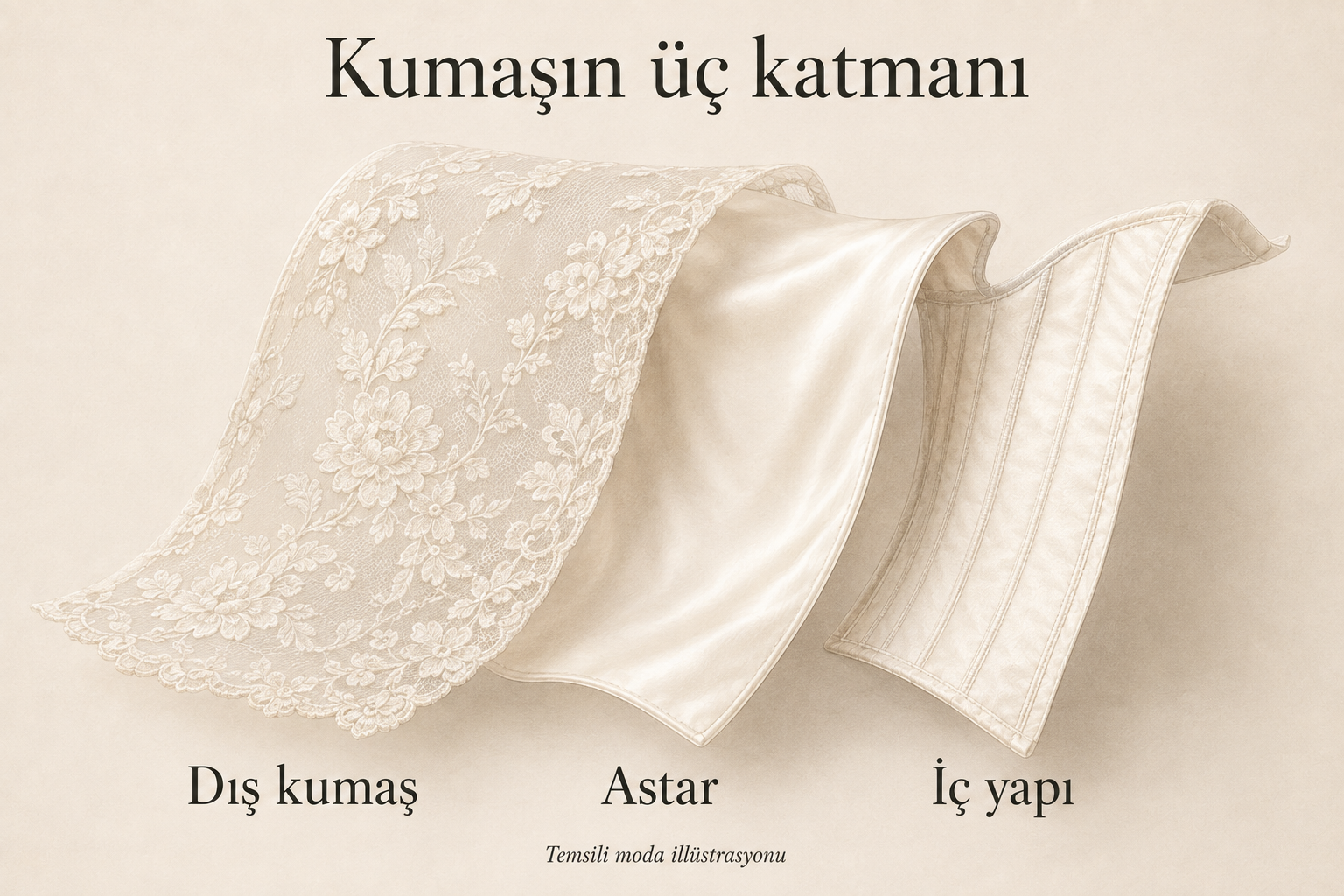
A lining does more than cover. It can affect how the outer fabric falls, its color and how it feels against your skin. The corset, boning, cups, interfacing and underskirt layers support the shape of the dress.
To understand the inner structure at a fitting, try these tests:
- Breathe normally and stay in the dress for a few minutes.
- Raise your arms, lean forward and sit down.
- Note where the zipper, boning and seams press.
- Check whether the bodice rides up or pulls down.
- Try it again with the underwear or support layer you plan to wear.
For underlayer options, see our guide to what to wear under a wedding dress.
Match embellishment to how you’ll wear the dress
Beads, pearls, sequins and stones each behave differently in light. As the density rises, the weight, the drape of the fabric and the way it feels can change too. You can’t tell from a picture whether an embellishment is comfortable to wear.
Run your hand over the inside of the fabric. If you feel a hard attachment point or a sharp edge, ask about the lining and the finish. Where the arms rub against the bodice, test the embellishment with movement. Ask whether spare beads or a repair method are available.
Choose accessories after the dress, and try them together
A veil, crown, hair accessory, earrings, necklace, belt and gloves can compete with each other when worn all at once. There’s no single rule such as “a simple dress always needs a statement accessory.” It’s safer to decide on a focal point and see the pieces together in one fitting.
Veil
Consider veil length together with the train, your hairstyle, the venue and how you’ll move. A lace edge or dense appliqués can cover the back detail of the dress, while a very plain tulle keeps the look calmer. Practice how the comb will be fixed in your hair.
Jewelry and hair accessories
The neckline, the shine of the fabric and the density of the embellishment can affect the scale of jewelry, but personal style comes first. Choose the metal color not by general “skin tone” rules alone, but by trying it near your face against the color of the dress and in real light.
Shoes
Heel height directly affects the length of the hem. If you can, go to the final length check in the shoes you’ll wear on the day. Think about grip on the floor, standing for a long time, and how the hem length changes if you switch to a backup pair.
Check color and fabric in different light
Ivory, off-white, champagne and other shades can look different on screens and in shop lighting. If you take photos, turn off automatic filters and compare the fabric in light close to daylight, in warm indoor light and in light like your venue’s.
If you’re considering a colored dress, our guide to black, pink and pastel wedding dresses covers lining, contrast and photo checks.
Compare fabric samples under the same conditions
Comparing samples in different light or over a different lining muddles the result. First see each sample side by side in the same light and over the same support. Then look at the fabric you’ve chosen again with the lining and inner structure that will actually be used.
| Topic | What to look at | What to do with the sample |
|---|---|---|
| Satin surface | Reflection and fold marks | Compare how it looks still and moving in the same light. |
| Tulle / organza | Layers, volume and edge | See the real number of layers together with the lining. |
| Chiffon / fluid fabric | Drape and whether the layer underneath shows | Hold the sample upright and look at it with the lining. |
| Lace / appliqué | Motif, finish and feel | Look up close at how the pattern joins, and from a distance at the overall placement. |
Don’t rub, pull, wet or heat a sample yourself, because that can damage it. Look at it as it is, and ask for stitching, care and content details in writing. If you can come to Gaziantep, you can book a fitting appointment at our atelier to look closely at fabric textures, French lace work and tulle drape in daylight, and to go through the swatch kits. Ordering from abroad? Ask us about the fabric, lining and construction of any style before you order.
- Note the sample code and the lining used for each of your two candidates.
- Keep the light the same, and write down the difference in color, surface and layers.
- See your final two options together with the silhouette and accessories you want.
Frequently asked questions
What is the best wedding dress fabric?
There’s no single “best” fabric for everyone. Weigh the silhouette you want, the venue, the season, the inner structure, care and your own comfort together.
Does satin wedding dress fabric wrinkle a lot?
You can’t tell how a fabric wrinkles from the word “satin” alone. Fiber, thickness, weave, how it’s transported and how long you sit all change the result. Check the real dress after you’ve moved in it, and ask about care instructions.
Should I bring accessories to the first fitting?
You don’t have to at a first choosing appointment. As the hem length and final look come together, it helps to try your shoes, the real underlayer, the veil and any key accessories with the dress. If you can’t visit us, use our measurement guide to take your measurements accurately and see the size chart, and ask us about shoe height and hem length. For more on preparing, see our guide to how to prepare for a wedding dress fitting.