Choosing a modest wedding dress: neckline, sleeves and lining
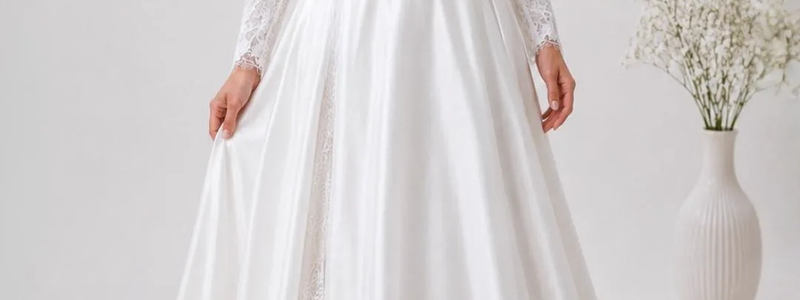
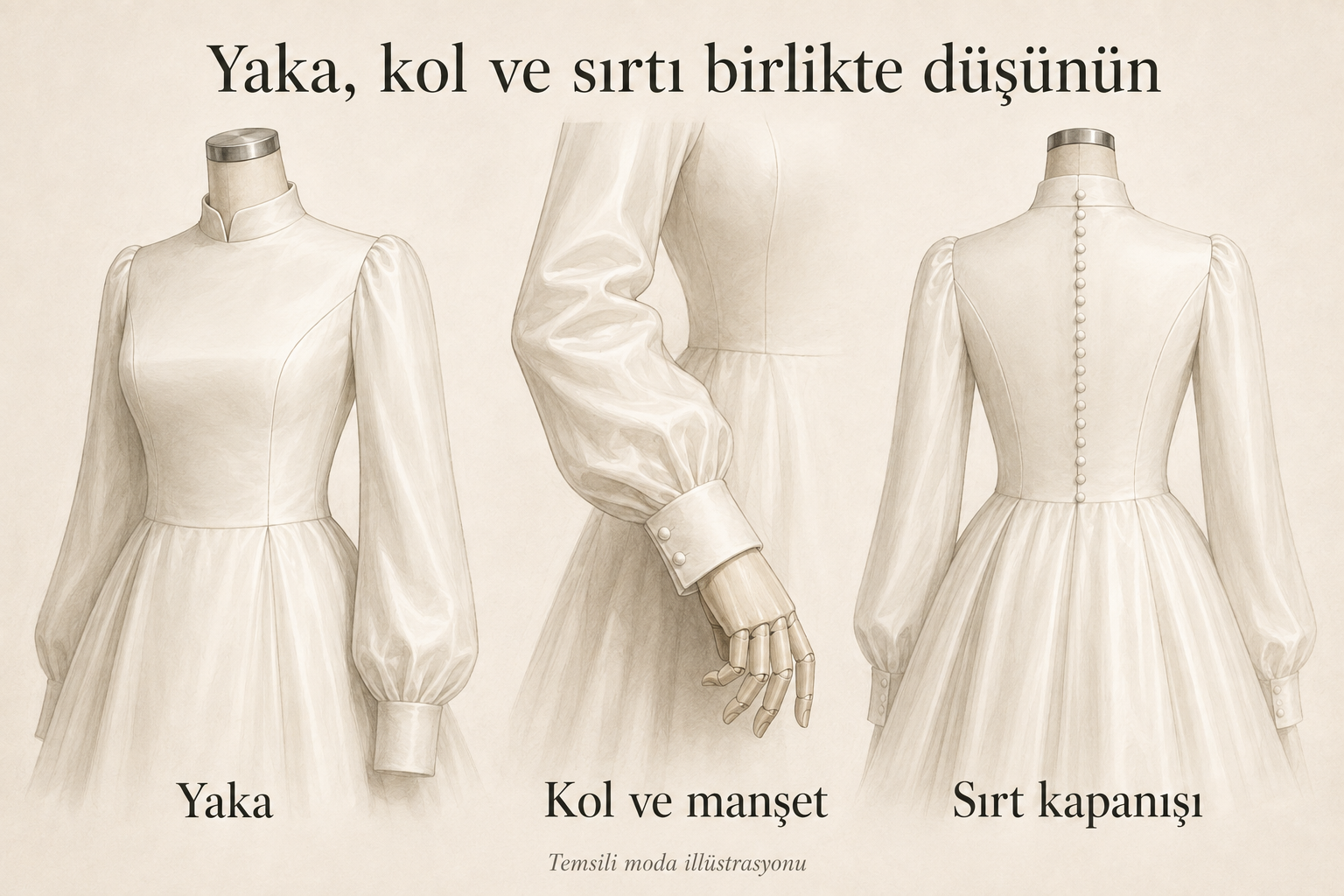
A modest wedding dress isn’t an open style with sleeves and extra pieces added afterward. The height of the neckline, the armhole, the cuff, the lining, the bodice, the headscarf and the veil all have to work as one design. Coverage that holds while you stand can change when you raise your arms, sit down or stand in strong light.
A good choice keeps both the level of coverage you want and your comfort through the whole day. To see our styles and how we handle custom pattern details, visit our modest wedding dress page.
Put your coverage needs into specific words
“Fully covered” can mean different things to different people. Before a design conversation, spell out each of these points:
- How high should the neckline sit under the chin?
- Should the nape and shoulder line be fully covered?
- Where should the sleeve end at the wrist, and should the cuff be fitted or open?
- Is skin-tone tulle acceptable, or do you want an opaque lining?
- Should there be no gaps at the back closure or between buttons?
- How much of the neckline will the headscarf and veil cover?
Writing these details into your fitting notes, rather than leaving them spoken, makes your expectations something you can check.
The neckline and headscarf need room for each other
A high neckline can look elegant and complete, but it shouldn’t press on the chin, the nape or the headscarf when you turn your head. At your first fitting, if you can, bring a headscarf tied with about the volume you’ll wear on the day.
Look at the height at the front and the back separately. The front may look right while the nape collides with the veil comb. Also check that closures such as buttons, zippers or hooks don’t catch on the headscarf.
Do four movement tests on the sleeves
A long sleeve that simply reaches the wrist isn’t enough. In lace or embellished fabric with little stretch, a narrow sleeve can limit movement. At your fitting:
- Reach your arms forward.
- Bend your elbows fully.
- Lift your arms to shoulder height.
- Reach behind your head with your hands.
If the cuff rides up, the armhole pulls or your shoulders lift, the room for movement needs another look. A sleeve that’s too loose can also catch on food, candles or jewelry, so the width should suit how you’ll use it.
Check the lining in daylight and with a flash
White and off-white fabrics can look more see-through than expected in strong light. Shop lighting alone isn’t a sufficient test. If you can, take front, side and back photos near a window, with a phone flash and with light coming from behind you.
Skin-tone tulle can look like a covered surface, but it may not meet your own expectations for coverage. Ask about the material of the neckline, sleeve, back and skirt lining separately. As you add opacity, also consider how the warmth and weight of the dress will change.
Choose the bodice and skirt together
An A-line wedding dress can build a balanced, flowing shape with long sleeves and a high neckline. A ball gown or a straight cut is possible too. The point is to balance the amount of detail on the upper body with the volume of the skirt.
When embroidered sleeves, a beaded neckline, a lace bodice and a full veil are all used at once, the focus can scatter. Pick one main detail first and let the other pieces support it. Even when you want something simple, clean seam lines, fabric texture and a well-made pattern can create a strong look.
See the headscarf, veil and accessories in the same fitting
The shade of your headscarf may not sit in the same white family as the dress. Place the fabrics side by side in daylight. Try where the veil comb will be fixed, and whether it pulls on your head or limits your shoulder movement.
Before choosing earrings, a crown or a brooch, see the frame that the neckline and headscarf make. Rather than adding more accessories, choosing one focal point around the face often gives a cleaner result.
Record coverage by area and by movement
Instead of only saying “make it covered,” write down which area you want to get which result. Using the same checklist with us helps make sure a point about the sleeves or back isn’t missed just because the neckline height is right.
| Area | Tell us what you want | Check together |
|---|---|---|
| Neckline and nape | Height, fabric and how much gap you accept | Turning your head left and right with the headscarf and veil |
| Sleeve and cuff | How it ends at the wrist and the lining you prefer | Where the cuff sits when you bend your elbow |
| Back closure | Gap and opacity expectations | Whether a gap opens when you sit or lean back |
| Lining | Which areas should be opaque | How it looks in daylight and in light like your venue’s |
A phone flash alone isn’t a definitive opacity test. Judge the image together with a check by eye, and look again whenever the headscarf, the underlayer or the lining changes. If you take photos, ask permission first and decide where the personal images will be stored.
- Write your coverage expectations into your fitting notes, area by area.
- Try the neckline, veil and headscarf together.
- Show where it pulls or slips, without forcing the movement.
See the neckline, sleeves and bodice together in Glamoure Modest
Glamoure Modest combines a high neckline, long lace sleeves, satin draping at the bust and an A-line skirt. It’s a useful style for putting your own wishes into words: where you’d like lace, where you’d like satin. In the product photos, pick the neckline and sleeve details you like and think about them together with your headscarf and veil plan. To compare other silhouettes and necklines, browse our modest wedding dresses. If you can come to Gaziantep, you can book a fitting appointment at our atelier to test neckline height, sleeve movement and lining opacity at your own pace. Ordering from abroad? Use our measurement guide, and ask us how the neckline, sleeves and lining of a style are made before you order.
Frequently asked questions
Can sleeves be added to an open wedding dress later?
On some styles it may be possible, but the shoulder, armhole, neckline, lace direction and inner support all have to be redesigned. Don’t assume that sleeves added afterward will automatically fit a ready-made style. The same principles you look for in a wedding dress, a high neckline, an opaque lining and graceful sleeve coverage, also apply, with the same pattern discipline, to our custom-made modest evening dresses for engagement celebrations and other invitations.
Is skin-tone tulle considered modest?
That depends on your own level of coverage. See how opaque the tulle really is in different light, and tell the design team your expectations clearly.
Is a modest wedding dress hotter to wear?
Extra lining and layers can add warmth, but the result varies with the fabric, the season, the venue and the ventilation. Try a sample fabric against your skin, and plan for the move between indoors and outdoors.