How to choose a winter wedding dress
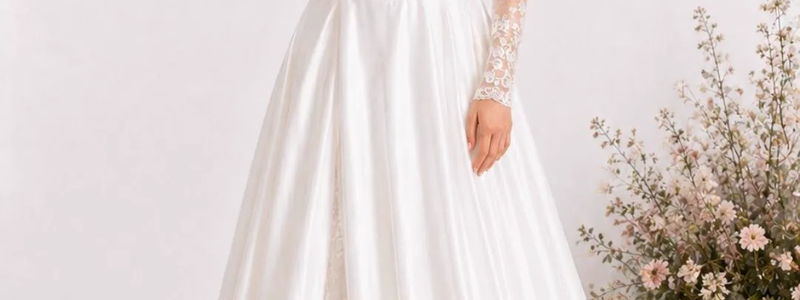
A winter wedding dress doesn’t have to be long-sleeved or made of thick fabric. How much of the day you’ll spend outside, how the venue is heated, the car transfer, your photo plan and your fabric layers all decide how comfortable you’ll really be. A heavily lined dress can feel stifling in a very warm hall, while for a short photo session outdoors the right top layer may be enough.
So instead of looking for one “winter style,” plan indoor and outdoor scenarios separately.
Map out the temperature of your day
Write down every part of the wedding:
- Getting-ready room
- From the car to the venue
- Outdoor photos
- Ceremony space
- Dinner and dance hall
- Leaving at night
Think about how long you’ll spend in each place and whether you can put an extra piece over your dress. Ten minutes outside for photos and a long ceremony in the open call for different solutions.
A long sleeve alone doesn’t guarantee warmth
A sheer lace or tulle sleeve looks covered but gives limited warmth. Opaque fabric and lining can be more protective, but you still need room for your arms to move. Bend your arms, hug someone and check that you can dance without lifting your shoulders.
If the cuff is too tight it can restrict your hands and wrists; if it’s too wide it can catch on a table or an accessory. Plan how easy the dress will be to put on, with buttons, a zipper or a hidden opening.
Match fabric weight to the conditions in the venue
Mikado, taffeta, thick satin or a skirt with many layers can give a structured silhouette. For a winter engagement party indoors, velvet touches and rich embroidery give engagement dresses a warm, elegant look. But a heavy fabric isn’t automatically more comfortable: the weight of the skirt can pull on the bodice and shoulders.
Tulle, organza and fine lace can also work for a winter wedding. The need for warmth can be solved with an inner lining, a removable layer and a venue plan. Choose fabric for how it looks and how you’ll use it, not for the season.
Removable layers suit both settings
A cape, bolero, shawl, detachable sleeves or an overskirt can be worn for outdoor photos and taken off in the hall for a lighter look. Make sure the extra piece:
- Doesn’t clash with the neckline or the veil
- Fastens without crushing the dress
- Doesn’t catch on jewelry or embroidery
- Can be taken off quickly with help
- Can be stored safely once it’s off
Don’t just drape the piece over your shoulders for a photo. Walk in it, sit down and practice getting into a car.
Skirt, train and wet ground
Rain, snow and wet stone can stain and weigh down a train. If you want a long train, plan how to carry it outside, where it can dry when you come in, and how to gather it during the celebration.
In an A-line wedding dress or a princess wedding dress in a fuller fabric, the underlayers can keep the skirt off your legs, but the total weight and the warmth in the hall can go up. In a straight or mermaid cut, make sure that fabric touching wet ground doesn’t restrict your step.
Shoes and a second pair
Closed-toe shoes, boots or a more protective shoe can be practical outdoors, and you can wear a different pair in the hall. If the sole heights are very different, your hem length can become a problem.
Grip matters on slippery ground. Try your shoes before the wedding on a clean, similar surface. Set up a changing area so wet shoes don’t touch the lining of your dress.
Plan your inner layer so it doesn’t show
You might consider a thermal or protective layer in a skin tone, but it shouldn’t leave a line at the neckline, sleeves or under the skirt. In a very warm hall, a layer you can’t remove can be uncomfortable. Wear the real inner layer you’ll use on the day at your final fitting.
Check how opaque the fabric is in a camera flash and in daylight. A white inner layer isn’t always the least visible choice.
Turn indoor and outdoor transitions into a layer plan
Calling a dress “winter” doesn’t tell you how warm it will feel. Think about outdoor photos and the heated hall separately. Decide when you’ll put on the removable piece and who will hold it when you go inside.
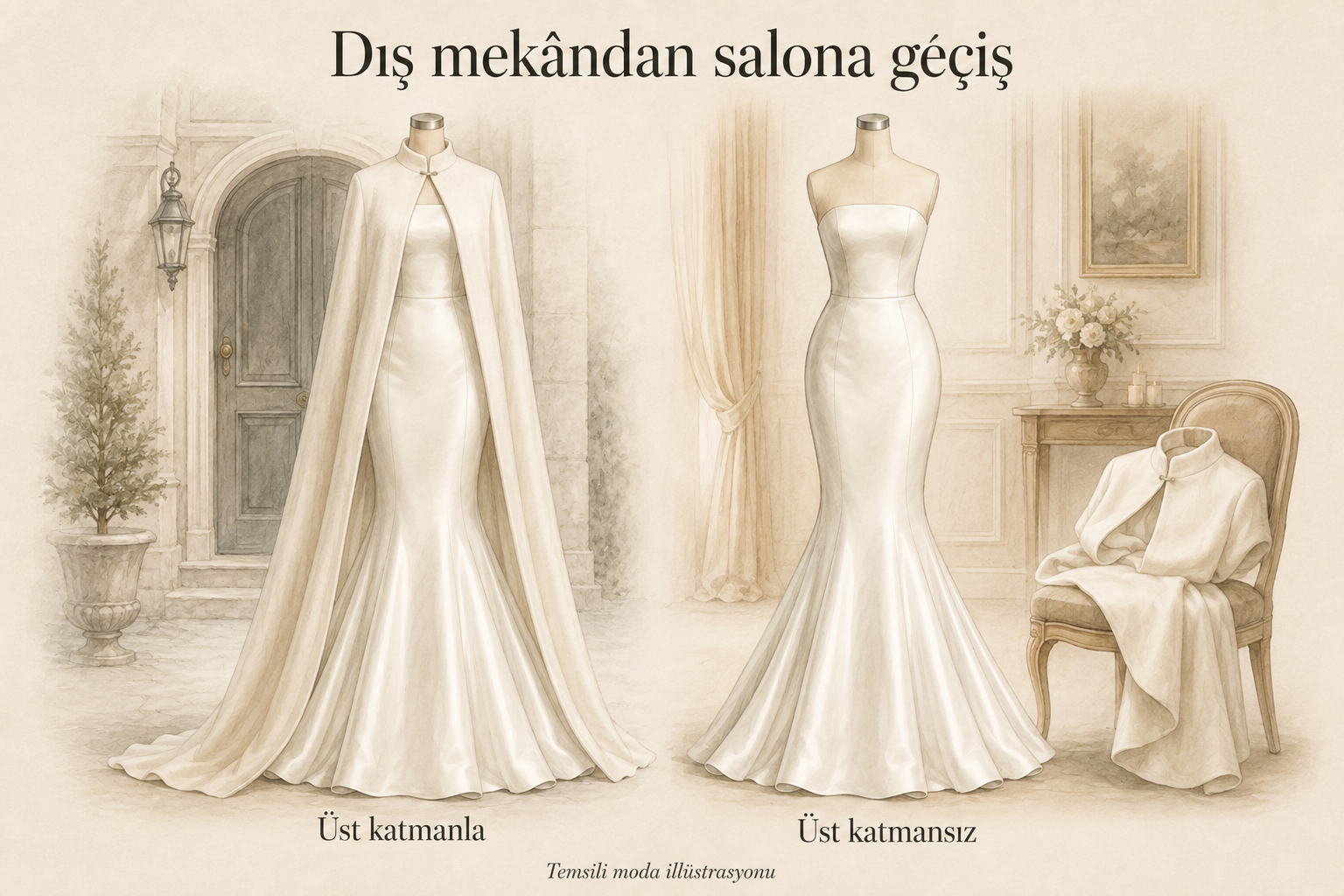
| Part of the day | What to try at your fitting | Logistics to decide |
|---|---|---|
| Getting out of the car | Sitting and standing in a cape or shawl | A dry route and help with the skirt |
| Outdoor photos | Veil, neckline and top layer together | How long you’ll be out and an indoor alternative |
| Entering the hall | Taking the piece off without snagging | Who stores it, and where |
| Dancing / leaving at night | Moving with and without the top layer | Putting the layer back on when you leave |
Think about the conditions in the hall before choosing a thick inner layer you can’t take off. If you can come to Gaziantep, you can book a fitting appointment at our atelier to look at mikado and heavier fabrics for winter weddings and to try a cape or fur accents with your dress. Ordering from abroad? Our measurement guide shows how to measure yourself, and you can ask us about sleeves, lining and removable layers before you order. Photographing a piece draped on your shoulders isn’t enough: try the fastening, sitting down and wearing it with a veil. Update your plan with your planner according to the real weather.
- Write down the parts of the day you’ll spend outside.
- If you have two pairs of shoes, check your hem length with both.
- Don’t leave a wet outer piece lying next to your dress.
Consider a long sleeve together with its material
Gloire has long sheer lace sleeves, while Glamoure Modest combines a high neckline, long lace sleeves and satin bodice details. Both have long sleeves, but they shouldn’t be chosen with the same expectations of coverage or warmth. To look at fabric and pattern options for closed necklines and sleeves in a winter wedding, see our modest wedding dress collection. Look at the product details, decide on the look you want first, then plan the outdoor layer separately.
Frequently asked questions
Does a winter wedding dress have to be long-sleeved?
No. A short-sleeved, strapless or strappy style can work with a cape, bolero and an indoor-outdoor plan. The choice depends on how covered you want to be, your style and the real temperature.
Does a lace sleeve keep you warm?
Fine lace gives limited warmth. An opaque lining or an extra layer can add warmth, but think about movement and the conditions in the hall too.
Can you wear a long train if it snows?
You can, but plan how to carry it outside, how to get inside and how to manage the wet. Don’t apply spray or heat to the fabric without the atelier’s approval.